AI in Healthcare: How Technology Saved a Dog’s Life

AI in Healthcare: A Devastating Diagnosis That Started the Journey
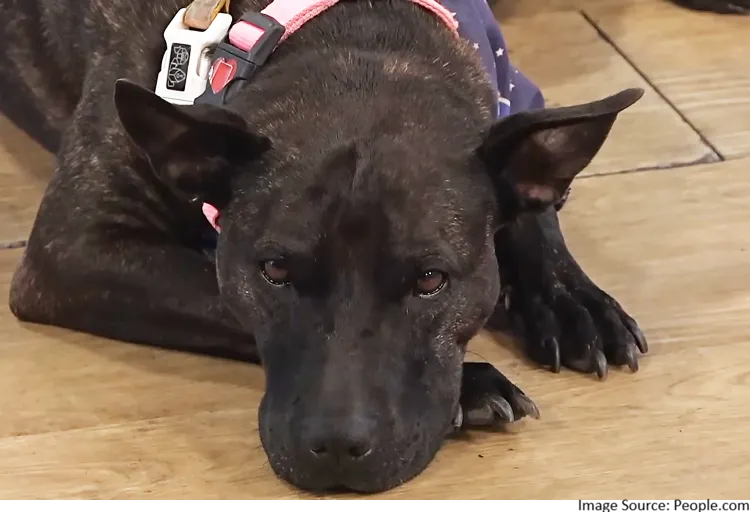
Rosie was diagnosed with cancer, and this fact was hard to digest for Conyngham. This is because, as with most pet owners, he discovered that the traditional veterinary care had fewer choices, which are extremely costly and have low turnover rates. Because he was not going to simply do something, he chose the other path and utilized his data analysis and artificial intelligence abilities.
AI in Healthcare: Turning to Artificial Intelligence for Treatment
Conyngham did not just concentrate on the established methods and applied AI to process an enormous quantity of medical and veterinary records. The possible treatment that was state of Rosie could be traced by him in research papers, and databases of drugs and the effects of treatment.
This process involved:
- The compilation of medical and scientific research, which is publicly available.
- Investigate the interactions of drugs and treatment reactions.
- Selecting the successful combinations with the help of AI models.
- Education of an individualized treatment regimen
AI in Healthcare: Personalized Treatment Plan for Rosie
The goal of his effort was to design an individualized treatment plan. This plan focused on curing Rosie’s cancer more efficiently than existing alternatives. It reflects a growing medical trend toward personalized treatment, rather than the traditional one-size-fits-all approach.
Rosie initially responded well to the treatment. This positive response attracted attention from both the tech and medical communities. Although she has not fully recovered yet, there is hope and inspiration in the progress made so far.
AI in Healthcare: Key Highlights of the Breakthrough Story
- Emotional Motive: Conyngham was emotionally attached to his dog, and it is what predisposed him to do the project.
- AI in Action: The application of artificial intelligence has been used to deal with vast volumes of data within a constrained time frame.
- Available Innovation: It is now accessible to individuals and not only to institutions that have access to stronger tools.
- Potential Future: The plan will have an effect on human and veterinary medicine.
- Risk: The professionals are concerned with professional consultations
The Bigger Picture: big data in healthcare.
It is the narrative that elevates a greater change in the manner in which technology can be employed to transform healthcare. The use of artificial intelligence is gradually growing in popularity, and humans can contribute to the innovation in a manner that was not possible before.
However, it also leaves certain relevant questions:
- Is it possible to control medical solutions that are AI-driven?
- How could the issue of safety and innovation be solved?
- Is it scalable such treatment on an individual on this level?
A Glimpse into the Future
The instances, such as the case with Rosie, can become widespread with the further development of AI. Something that seemed to be something wonderful at one time may turn into a subject of a usual medical procedure in the near future.
At the same time, Conyngham’s article effectively demonstrates how people can use technology, along with motivation and active listening, to overcome existing limitations. He not only rescued a pet but also helped redefine what is possible in the field of medicine.