How Assistance Dog Improve Lives for People With Disabilities?

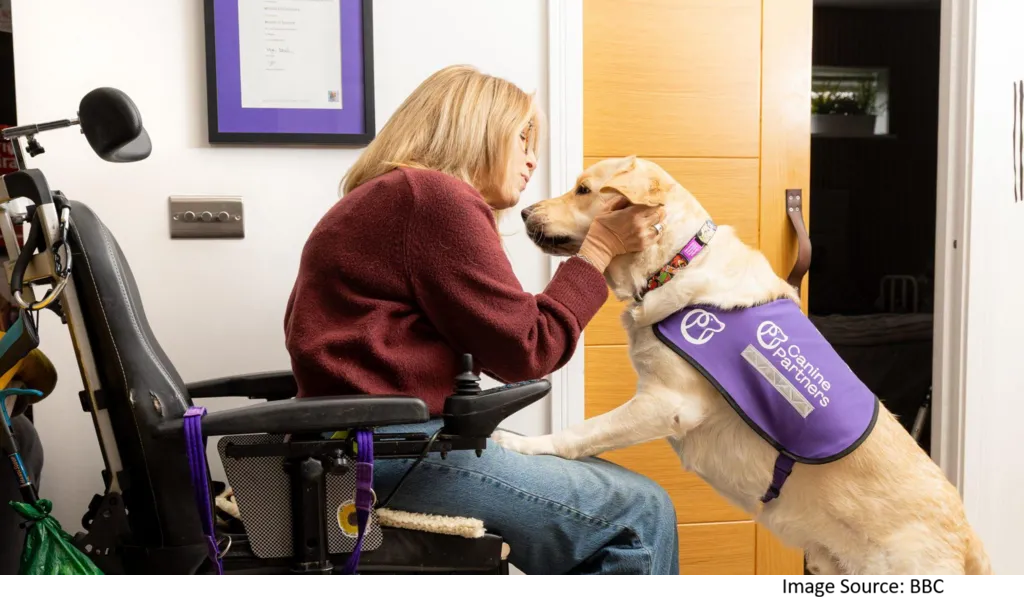
Assistance dog help people with disabilities live with greater comfort, support, and independence. Life shifted entirely for Shelley Fitzsimmons when her trained dog arrived. At 52, she faces daily hurdles due to Ehlers-Danlos Syndrome. This condition twists connective tissue, causing joints to slip without warning. Pain sticks around, never really leaving. Yet now, each day feels different because of one steady companion walking beside her.
Out of nowhere came Meikle, a golden Labrador just three years old, paired with Shelley through Canine Partners. Happiness slipped back into her days once he arrived, then confidence followed close behind. Routine felt different now – fuller, steadier. A switch flipped when he walked in, she said, like light suddenly filling a long-dark room.
Daily Support and Independence
Most days, Meikle steps in when simple chores feel out of reach for Shelley. Assistance dog like Meikle spend months learning how to respond to specific health needs. Because of his training, she moves through her routine without relying on others. Tasks that once caused strain now happen smoothly, thanks to steady companionship by her side.
Some of the tasks Meikle performs include:
- Helping Shelley sit up in bed
- Bringing shower items like shampoo and towels
- Fetching clothes from the drawers
- Loading and unloading the washing machine
- Bring socks and slippers
- Providing emotional comfort during difficult moments
What looks like small stuff might actually shift everything when you face a long-term health challenge every single day.
Emotional Benefits of an Assistance Dog
For Shelley, help from a service dog means more than just tasks. Her previous companion was Kibble, who stayed beside her for a full decade. Fear used to keep her inside – going out felt nearly impossible until he arrived.
One day, Kibble noticed Shelley’s heartbeat quicken, then gently nudged her toward a chair. As weeks passed, that quiet presence slowly rebuilt what fear had taken. Steps outside grew easier, not because they changed – but because she wasn’t alone.
Out there, a dog might just shift how folks pay attention. Shelley put it plainly, eyes land on the animal before they do the chair. Because of that pup, conversations tend to start smoother, weigh lighter. First thing people see? A wagging tail, not limits.
How Assistance Dog Are Trained
Puppies start young, their days filled with quiet lessons and small tasks. Roughly twenty-four months pass before one of these dogs is ready, shaped slowly through repetition and trust. A Labrador often gets picked, not just for smarts, but because crumbs mean more than praise. Patience matters most – mistakes stretch longer than progress.
Standing at just the right height matters when picking these dogs. Yet it is their quiet nature that makes them fit for busy streets and stores. Reaching a light switch means being tall, but not restless. Their job demands patience more than speed. What counts most is how they behave near crowds, not just how big they get.
A Life-Changing Partnership
Life feels different now, Shelley says, because of Meikle – way past just help with daily tasks. Comfort comes easily when he is around, she explains, making mornings feel lighter than before.
One woman’s experience shows what service dogs do. Life changes when a dog takes on tasks, eases loneliness, and lifts the mood for someone with physical challenges. Training turns them into more than support – trust grows, routines shift, and presence becomes normal. They stand beside their person, day after day, without spotlight or drama.
References Link: https://www.bbc.com/news/articles/ckgp8yvwq40o