How Therapy Dog Hospital Care Transforms Patients


A six-year-old therapy dog named Teddy is transforming the experience of patients in hospitals at Rabin Medical Centre, Israel. Teddy, in collaboration with experienced nurse and certified therapy dog specialist Keren Matry, comforts, motivates, and emotionally heals patients in various hospital units.
In contrast to conventional therapy animals that can only be found in rehabilitation units or outdoor hospital spaces, Teddy finds his way into intensive care, oncology, surgery, and neurology wards. Such a combination of professional nursing and Animal-Assisted Therapy is deemed an innovation in Israeli hospital treatment.
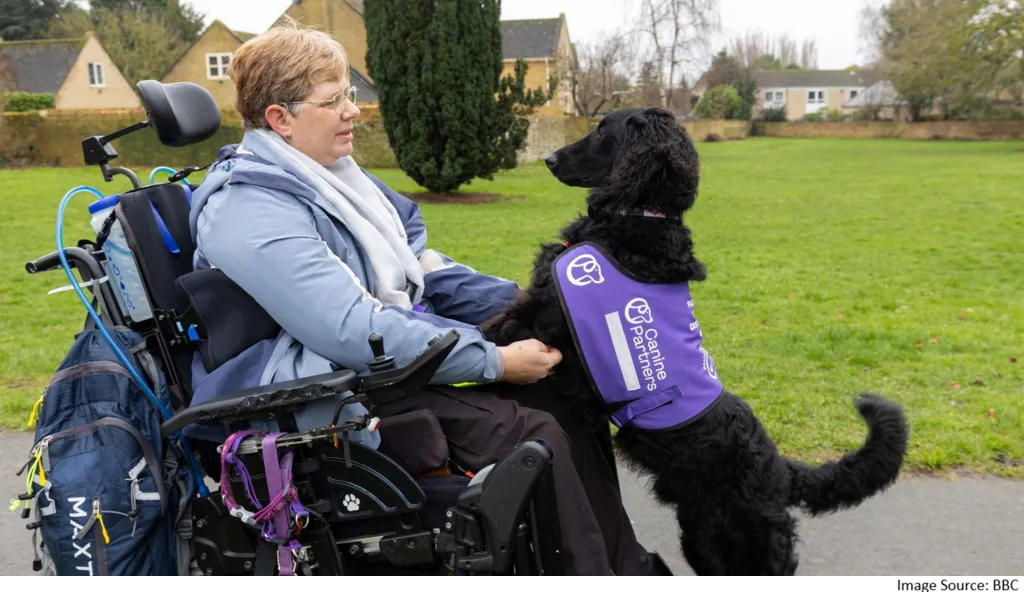
Matry elaborates, when he dons his vest, he is aware that he is heading to work.
Emotional and Medical Impact
Hospitalization usually deprives patients of their identity and autonomy. Putting on hospital gowns, being tied to a machines, and being bedridden may cause anxiety, depression, and lack of motivation. Teddy contributes to the improvement of that emotional drop.
According to Matry, interaction with Teddy:
- Enhances patient involvement in treatment.
- Reduces pain and anxiety
- Improves mood
- Reduces dependence on specific drugs.
- Improves the experience in the hospital.
These observations are explained by science. Playing with dogs triggers the secretion of oxytocin – a hormone that is linked to bonding and lessening of stress. This is a physiological reaction that encourages rest and psychological stability.
Real-Life Transformations
The introduction of Teddy has brought about tremendous breakthroughs.
One of the survivors of the Hamas massacre of Oct. 7 had failed to talk about her trauma. But this time she started recounting her tale at the side of Teddy. The dog provided a judgment-free and safe environment.
In another instance, a young female who was critically injured was reliant on oxygen. In the course of her interaction with Teddy, she paid attention to feeding and petting him. Bit by bit, Matry decreased the amount of oxygen support, and the patient was not even aware of this. It did not take long before she was breathing on her own and was discharged to rehabilitation.
Silent comfort was also found by an injured soldier who lamented the death of a best friend in Teddy. The soldier bonded with the dog without saying a word, and soon, on a symbolic note, he gave Teddy his Givati beret as a token of appreciation.
Measurable Clinical Results
The evidence-based study that is currently being conducted is the first in Israel by Rabin Medical Centre into the combined effects of nursing care and Animal-Assisted Therapy on stroke patients.
Preliminary findings show:
- Four out of 10 physical exercises are completed at a rate that is 40 per cent higher in the presence of Teddy.
- Enhanced participation in the rehabilitation programs.
- Increased emotional responsiveness.
The neurologists of the hospital explain that the dogs have the ability of stimulating parts of the brain that would otherwise be hard to stimulate. Animals have the ability to communicate nonverbally, and therefore, they tend to reach patients where human beings fail to communicate.
More Than a Pet
Teddy is not just an amiable guest. The man is well-trained and has a biannual health check-up. Medical screening will make sure that he does not communicate with immunocompromised patients.
Notably, Matry focuses on the fact that Teddy is not a pet of a patient. A pet is a symbol of everyday routine and duty. Teddy, on the other hand, comes in times of crisis and gives unconditional acceptance and emotional relief.
A Vision for the Future
Matry does not see any other option for the future, but one that involves a nurse and a trained therapy dog in every department of a hospital. The atmosphere of medical assistance and emotional care is strong.
Teddy symbolizes warmth, connection, and hope in the stressful hospital environment full of fear and uncertainty. It even takes the shortest stints of positive emotional stimulation to help a person recover, and occasionally, it is presented on four legs.
References link: https://www.jns.org/patients-best-friend-how-therapy-dog-teddy-is-transforming-hospital-care/