Can Assistance Dogs Transform Lives and Independence Today?

Assistance dogs are transforming the lives of people living with disabilities. Simple tasks such as picking up objects or opening doors can become difficult or even impossible for some of them. But helping dogs is turning lives around, until they give support, independence, and emotional companionship.
One significant change in one individual is Samantha, who is a 49-year-old lady from Peterborough with a very rare type of neurological condition (dystonia). This condition results in painful muscle contractions and eventually results in severe physical disability.
Life Before Assistance Dogs Support
Samantha was diagnosed with dystonia in 2002. Over time, her condition worsened significantly:
- She lost the use of her hands
- It was very hard to walk.
- It was no longer possible to stand on their own.
Doctors informed her that there was no cure and that her condition would continue to decline. As her mobility reduced, she became increasingly dependent on others for daily activities. After the sudden loss of her mother in 2007, her situation became even more challenging, affecting both her confidence and independence.
A Life-Changing Companion
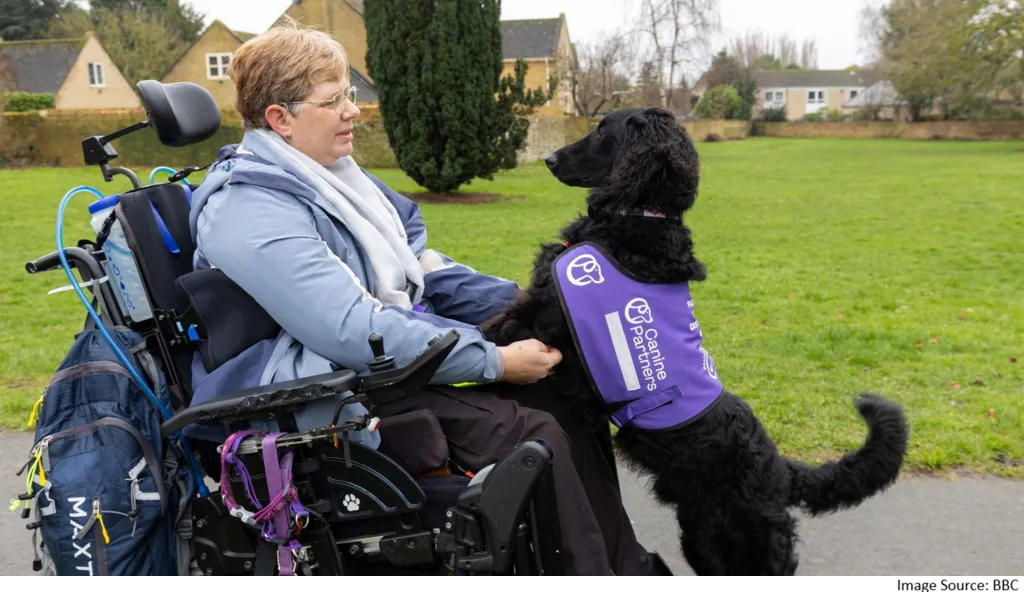
Samantha was matched with an assistance dog called Bugsy with the charity Canine Partners in 2015. Bugsy helped her with essential daily tasks such as:
- Collecting dropped objects.
- Opening and closing doors
- Helping perform mobility tasks.
By doing these small but very important acts for Samantha, she has developed a newfound independence, calling it a life-changing moment, and giving her the ability to enjoy herself.
Continuing Support with a New Assistance Dog Partner
Bugsy retired in 2025, after over ten years of friendship. He was still a beloved companion, but Samantha was introduced to a new assistance dog, Hank.
Hank is a labradoodle and soon became an important part of her life. Samantha said that no dog could replace Bugsy, but Hank was a source of new hope and support. She feels that without him, she would be fully reliant on other people and possibly leave the care home.
More Than Just Assistance
Assistance dogs are not just useful tools: they are emotional support and part of the family. Accompanied by Hank, Samantha has rediscovered her confidence and is an active member of her community.
She now:
- Pay visits to the nursing homes to comfort the residents.
- Goes out daily for walks and social activities
- Interacts more easily with others.
This change shows how assistance dogs not only enhance physical autonomy but also mental health and social cohesion.
The Role of Assistance Dogs Organizations
Organizations such as Canine Partners are very important to change lives. They select dogs, which are trained to help physically challenged individuals, and pair them with people according to their requirements.
Their work ensures:
- Good training of assistance dogs.
- One-on-one matching of individuals.
- Continued assistance to the dog and the owner.
Key Benefits of Assistance Dogs
Assistance dogs provide a wide range of benefits, including:
- Greater autonomy in everyday activities.
- Improved emotional well-being
- Enhanced mobility and safety
- Less dependency on careers.
- Increased social interaction and confidence
Conclusion
The story of Samantha is an excellent reminder of the way that assistance dogs are able to change people’s lives. Through her hardships in day-to-day activities to reclaiming her independence and meaning, her experience demonstrates the amazing effect these animals can have.
Assistance dogs are not just trained aids but also companions, providers, and life-changers. To the people with disabilities, they provide not only assistance, but hope, freedom, and a new meaning of life.
References Link: https://www.bbc.com/news/articles/c5ywl079nlpo