Lobular Breast Cancer Discovered After Dog Helped Save Life

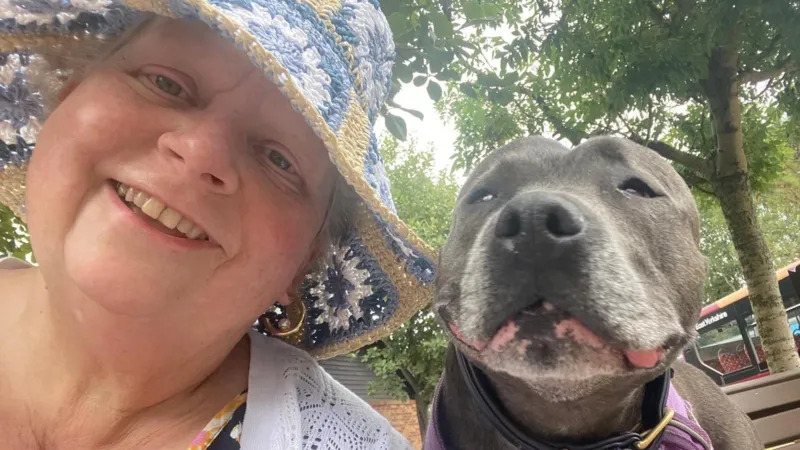
Sometimes, life-saving discoveries show up in the most odd ways. For Lesley Goodburn, a woman from Kidsgrove, Staffordshire, the moment that shifted her whole life didn’t come from a doctor’s visit or some careful medical testing, but from a small accidental bump by her beloved dog, Gertie
It looked like a regular little incident at first, then it quietly turned into the discovery of a hidden form of breast cancer that might have been missed if she had not noticed. Now she’s cancer-free, and genuinely thankful, and Lesley is telling her story to help bring attention to a lesser-known type of breast cancer, plus to remind people to listen to their gut when something feels a bit off, you know, that quiet warning inside them
The Discovery That Could Have Been Missed
Two years ago, Gertie sort of accidentally bashed into Lesley’s chest, and the impact made things feel off, so she did this quick, close look at the area. During that check, she found an unusual ridge across her breast, as if it wasn’t quite normal.
Naturally, she became concerned and scheduled an appointment with her doctor. After more tests, it turned out she had lobular breast cancer. And, compared to many other kinds, lobular breast cancer often doesn’t show up as some obvious lump, so it can be harder to catch in time.
“I’d never even heard of it,” Lesley said. “If the dog hadn’t bashed at my chest, I might have never noticed something was wrong, or maybe I didn’t even catch it in time. ”
Understanding Lobular Breast Cancer
Lobular breast cancer shows up in the milk-producing areas of the breast, the lobules, basically. Health experts say it makes up about 15% of all breast cancer cases, too, so it’s not the majority, but it still happens quite a lot.
Common symptoms may include:
- A thickened area or ridge in the breast
- Changes in breast shape or size
- Skin dimpling or puckering
- Persistent itching or tingling sensations
- A feeling of pulling or tightness in the breast
- Changes that are not accompanied by a lump
Because this cancer often grows in single-file patterns rather than forming a solid mass, it can be harder to detect through mammograms and imaging tests.
A Challenging Journey to Recovery
Following her diagnosis, Lesley underwent an intensive treatment plan that included:
- Chemotherapy
- Surgery
- Radiotherapy
After months of treatment and determination, she was finally told she was in remission. Looking back, she firmly believes Gertie played a crucial role in saving her life.
Without a shadow of a doubt, Gertie really saved my life, she said. Honestly, I didn’t see it coming.
Turning Personal Experience Into Public Awareness
Lesley isn’t new to these cancer awareness things. After losing her husband Seth to pancreatic cancer in 2014, only 33 days after his diagnosis, she kinda shifted into fundraising and advocacy for years. Her work has carried her around the globe, like trips to the Great Wall of China, Chile, and yes, even the South Pole, where she raised well over £50,000 for cancer charities.
These days, she’s teamed up with Lobular Breast Cancer UK to help others spot the warning signs earlier and ask for medical advice promptly, before it drifts too far.
The Powerful Message Everyone Should Hear
Lesley’s story really throws a key lesson out there, like not every cancer shows up in a neat, obvious way. If you keep your focus on strange or unusual shifts in your body, it can make a life-saving difference, sooner than you think.
Her advice is simple but powerful:
- Trust your hunches, and follow that inner “instincts” feeling.
- Never just gloss over unusual symptoms, like they’re nothing.
- Try to get medical advice if something feels off or even slightly odd.
- Don’t depend only on the lack of a lump, you know.
- Early detection can really save lives.
As Lesley reminds everyone, “Be brave. It might make the difference between being here in five years and not, ya know.
References Link: https://www.bbc.com/news/articles/c0ly1lxn95ko