PCMC Launches Citywide Crackdown on Unlicensed Pets

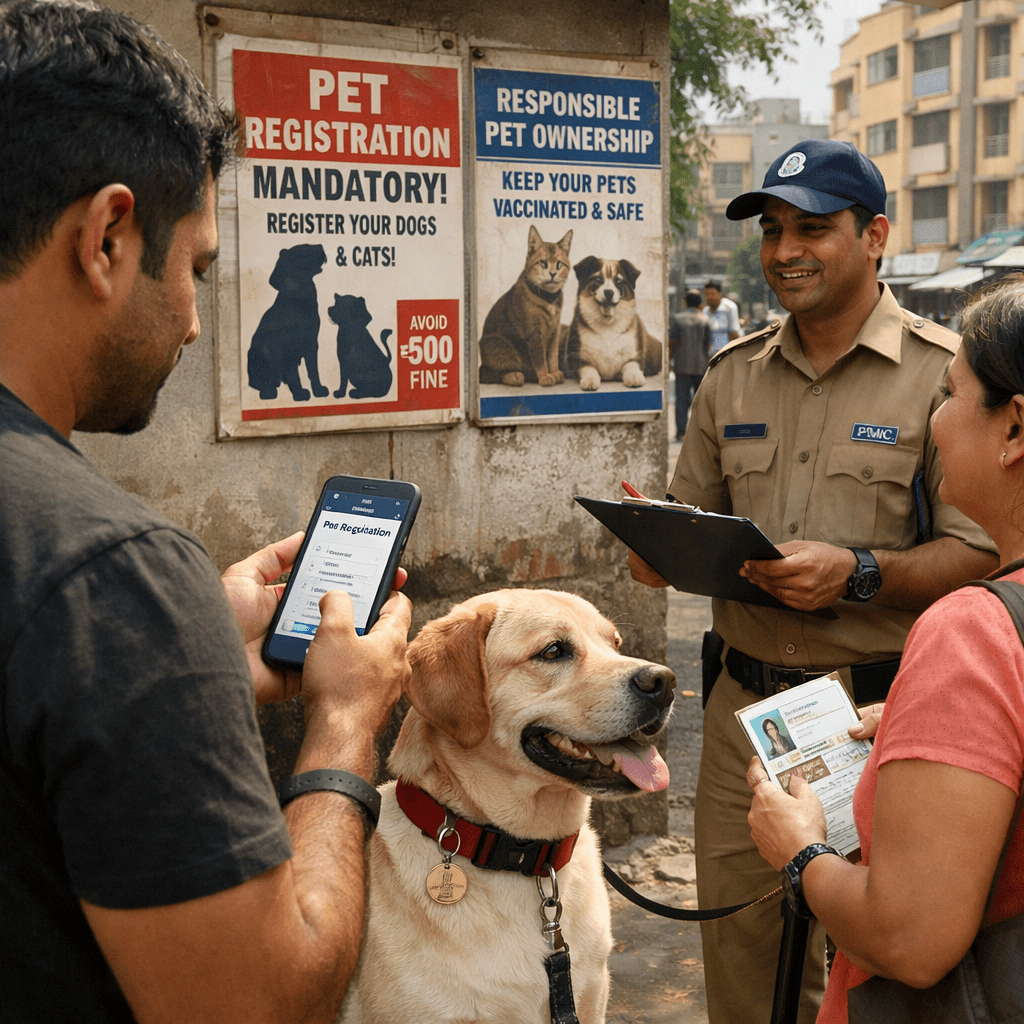
The Pimpri-Chinchwad Municipal Corporation (PCMC) has initiated an awareness program to curb unlicensed pets across the city and is charging a ₹500 fine to citizens who fail to register their dogs or cats. The civic body has taken this step in response to the noticeable rise in dog-bite incidents and growing concerns about the increasing stray animal population in the city.
The civic body emphasizes that the crackdown on unlicensed pets aims to promote responsible pet ownership, ensure public safety, and encourage humane treatment of animals rather than punish citizens. Will create a better and safer environment by introducing a compulsory pet registration, which will grant both the citizens and the pets protection.
Why PCMC Is Enforcing Mandatory Registration for Unlicensed Pets
Civic authorities claim that pets that are not registered complicate the process of tracking owners, their vaccination, and breeding methods. The city has reported a rising number of dog-bite cases in the recent past, with most cases being those that involved pets whose ownership information was not clear.
The key reasons behind this enforcement drive include:
- Increasing incidences of dog bites in the neighborhood and other places.
- Problems with the recognition of owners of aggressive or abandoned pets.
- The uncontrolled breeding is causing a rise in the number of stray animals.
- Absence of current vaccination history, particularly against rabies.
- Should have more data to design animal welfare and sterilization initiatives.
PCMC believes that these problems can be dealt with in a preventive and systematic way through mandatory licensing.
What Pet Owners Need to Do
In Pimpri-Chinchwad, any owner must register their dogs and cats with PCMC to get out of the penalty and legal troubles. It has made the registration process accessible through the online platform, which is convenient.
Pet owners must ensure the following:
- Request a pet license using the PCMC online portal.
- Present evidence of possession and residence.
- Provide new vaccination documents, such as anti-rabies vaccination.
- Periodically renew the license according to civil rules.
- Abide by local regulations regarding the relocation of pets, hygiene, and the safety of people.
Any lack of adherence to these requirements can result in a penalty of ₹500, and a more rigorous step can be taken against repeated violations.
Promoting Responsible Ownership to Reduce Unlicensed Pets
The officials of PCMC emphasize that it is not a pet movement, but a responsible one. The pets that are licensed are easier to track, inoculate, and handle, and this helps society.
Responsible pet ownership includes:
- Vaccinating healthy pets.
- Stopping pets from roaming around the open areas.
- This ensures that pets are not harmful to others.
- There is no need to be abandoned and unkemptly bred.
With these restrictions in place, PCMC will eliminate fights between the residents, pet owners, and stray animals.
A Step Toward Safer Communities
This crackdown stemmed from an overall change in urban animal control and civic security. When pet owners complete registration and follow the rules, authorities can better control disease spread, manage stray animal populations, and respond more effectively to animal-related incidents.
Authorities encourage pet owners to act immediately, not just to avoid fines, but to help build a safer, more responsible, and animal-friendly city. It is cooperation between the civic authorities and the people that will make this initiative successful in the end.