Search and rescue dogs improve emergency response in Scotland

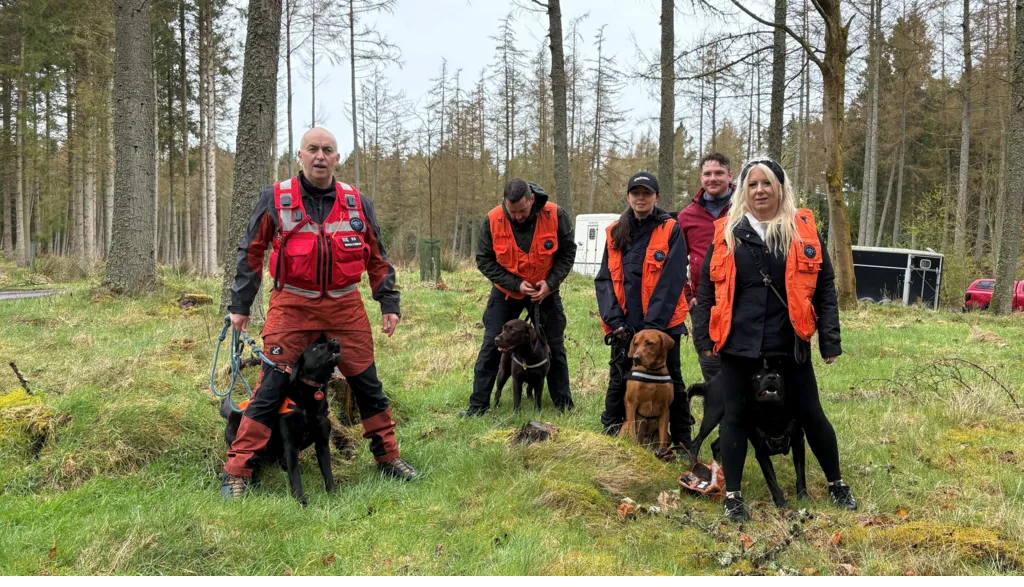
A pilot project in Scotland is introducing an unlikely yet highly effective partner in emergency search and rescue dogs. These trained search and rescue dogs are helping transform how missing individuals are located in challenging conditions. The project, guided by the Scottish Ambulance Service in partnership with Central K-9 Search and Rescue, will enhance the efficiency and safety of searching for and rescuing missing individuals, especially around water.
How Search and Rescue Dogs Improve Emergency Operations
Remote terrain water rescues and searches tend to be complicated, time-consuming and hazardous. Conventional approaches may require substantial human resources and expose responders to danger. Through the incorporation of trained dogs in such missions, the teams can cover extensive and challenging bodies of land very fast, enabling paramedics to concentrate on providing emergency health services.
In contrast to other search dogs trained to find human remains, trainers specifically train these dogs to locate people who are alive, making them highly valuable in time-sensitive rescue missions.
Key Benefits of Search and Rescue Dogs in Emergencies
- Speed: Dogs are able to cover large distances much more quickly than human teams.
- Accessibility: Adequate in thick जंगल, banks and rough topography.
- Safety: Minimises the risk to human responders.
- Efficiency: aids in reducing the search areas in a short time.
- Early intervention: The sooner it is found, the higher the chances of survival.
Training Search and Rescue Dogs for Real-Life Missions
To the dogs involved, it is more of a play than a duty. Trainers use rewards, usually toys, to motivate the dogs, and they conduct training regularly in diverse environments like forests, riversides, and rugged terrains to simulate real-life rescue situations.
Search and Rescue Dog Teams: Volunteers and Paramedics Working Together
The pilot program brings together volunteer handlers and well-trained paramedics of the Special Operations Response Team (SORT). This cooperation enables every group to play to its advantages:
- Dog handlers: Knowledge of search methods and dog behaviour.
- Paramedics: Emergency treatment and medical response.
- Joint operations: Co-ordinated searches in hot spots.
The program is currently being undertaken in the central belt of Scotland,d including places that are between Edinburgh, Fife, and Glasgow.
An increase in demand and expansion in the future.
Future objectives of the Program.
- Increase the area of coverage in Scotland.
- Find and educate more dog-handler units.
- Incorporate the use of dogs as a regular feature in emergency response teams.
- Enhance chances of survival with a quicker response.
Dogs Like Poppy Taking the Lead.
Poppy, a trained four-year-old search dog, already plays a key role in the program, proving that canine units can be highly effective in future emergency services.
A Good Step in the Right Direction.
This new method is a big change in search and rescue procedures. The program can not only increase the efficiency, but also the safety of responders and people in need by integrating human knowledge with the instinct of a dog.